As businesses review their environments for the year ahead, several clear design trends are beginning to define 2026.
Below, we outline the key developments we believe to be influencing commercial interiors and how they’re shaping the way workplaces, retail spaces and customer-facing environments are being designed and fitted out.
1. Warmer, more experiential spaces
After years of minimalism, 2026 is seeing a move towards interiors that feel richer, softer and more characterful. Businesses are looking for spaces that create an emotional connection rather than simply serving a functional purpose.
Warm materials, textured finishes and layered lighting are becoming increasingly popular, helping spaces feel more inviting and more reflective of a brand’s identity. This is particularly relevant in reception areas, meeting rooms and customer-facing environments where first impressions matter.
2. Natural materials and sustainable choices
Sustainability remains at the forefront of interior design. Companies are favouring natural, responsibly sourced materials such as timber, stone, cork and recycled composites. These finishes not only support environmental goals but also introduce a calming, biophilic quality that improves the overall feel of a workspace.
Businesses are also placing greater emphasis on durability and lifecycle value, selecting materials that offer longevity and lower maintenance requirements. As regulations tighten, sustainable fit-out choices are becoming a practical necessity as much as an aesthetic preference.
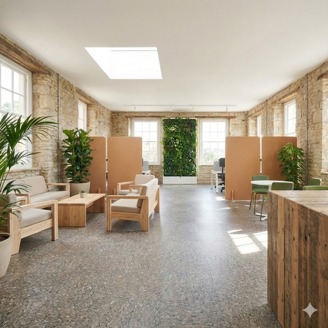
3. Flexible layouts for hybrid working
As hybrid working becomes a permanent fixture, flexibility continues to be a priority. Traditional desk-heavy layouts are being replaced with a mix of collaborative zones, quiet areas, touchdown spaces and social hubs.
Modular furniture, movable partitions and adaptable meeting rooms allow companies to evolve their space as teams and working patterns change. This approach supports productivity while making offices feel more dynamic and less constrained by fixed layouts.
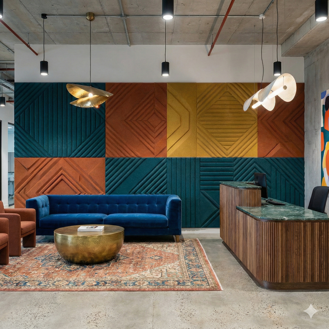
4. Stronger colour, bolder surfaces
Muted tones are being balanced with more expressive design choices. Feature walls, coloured acoustic panels, textured surfaces and sculptural elements are becoming increasingly common as businesses seek to add personality to their environments.
These touches are particularly impactful in retail and hospitality interiors, where visual identity plays a strong role in customer experience. Offices, too, are beginning to embrace deeper hues and bespoke finishes to help reinforce brand individuality.
5. Focus on wellbeing through lighting and acoustics
A well-designed space must feel comfortable to use, and wellbeing-led design continues to influence commercial interiors in 2026. Improved acoustics, warm ambient lighting and breathable layouts are helping reduce fatigue and create calmer, more productive environments.
Soft lighting, acoustic ceiling systems, wall panels and careful zoning are now central parts of modern fit-out planning rather than optional extras. With companies increasingly aware of their responsibility to create healthy workplaces, this trend is set to remain long-term.
As businesses refine their interiors for 2026 and beyond, the focus is shifting towards spaces that feel human, adaptive and environmentally responsible. Thoughtful material choices, flexible layouts and a stronger emphasis on atmosphere are all shaping the next generation of commercial interiors.
For organisations reviewing their environments, working with a fit-out specialist who understands these trends can make a significant difference, ensuring each space is not only functional, but also aligned with modern expectations and ready for the future.


